Distress Tolerance Worksheet
Distress Tolerance Worksheet
Couldn't load pickup availability
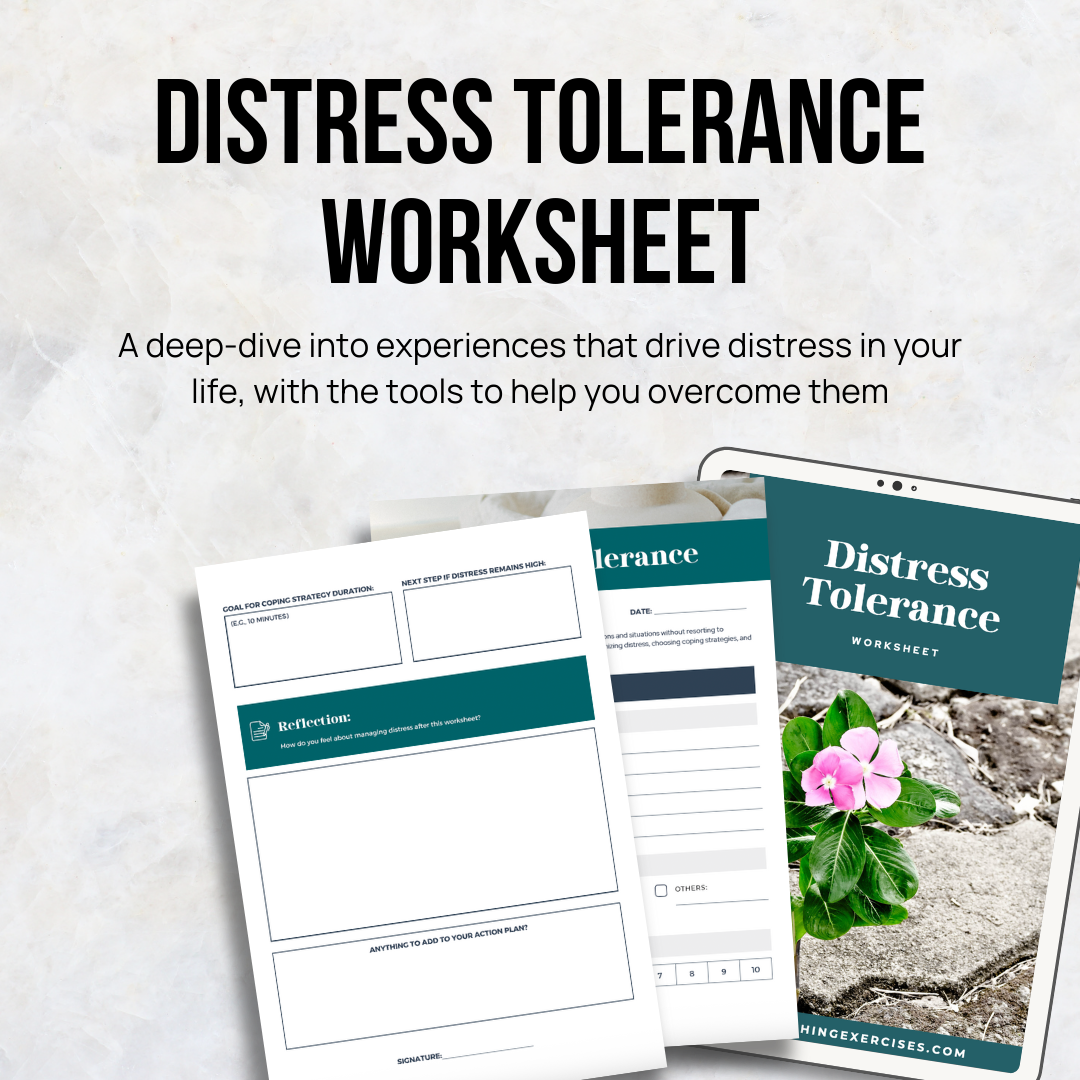
In a bad moment, the plan tends to be whatever worked last time, which might be a glass of wine or another hour at the desk. Better to write one while you're calm. The sheet does it in three parts.
- Name it. A recent situation, the emotions it brought up, and how intense it got, from one (mild) to ten (severe).
- Choose your tools. Three things you've relied on before, and a new one to try, such as deep breathing, muscle relaxation, mindfulness or a deliberate distraction.
- Write the plan. Who you will contact, by name and number. How long you'll give a strategy before moving on. What you'll do if the feeling doesn't come down.
Don't leave that last line blank.
This is for the hard hours in an ordinary life. If the distress is constant, or it frightens you, the right next step is your GP, not a worksheet. If you ever feel unsafe, don't wait for an appointment: in the UK, call Samaritans free on 116 123, day or night, or 999 in an emergency.
Also in: the Emotional Resilience Reset, £17, with the Nervous System Regulation Cards and a mood and energy tracker.
For coaches: it's in the Coaches Starter Library, with one licence for every client you see.
PDF, instant download, and yours to use as often as you like. If it doesn't help, email me within seven days and I'll refund you.